Technology
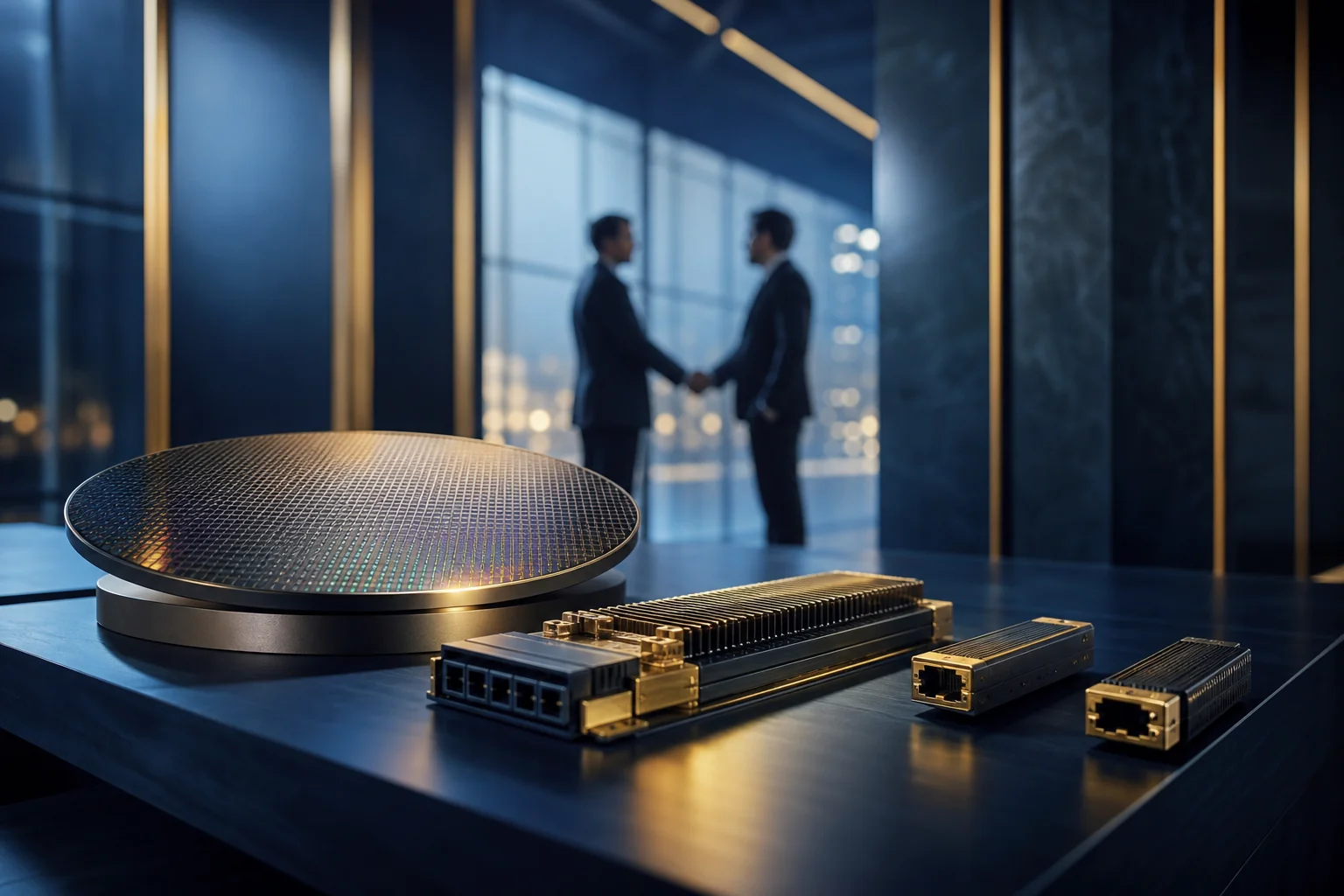
Marvell and Lumentum Forge Massive AI Connectivity Alliance
The $115 billion acquisition marks a major shift in semiconductor strategy as firms race to secure optical infrastructur...

Apple’s struggle to adapt to the AI revolution leaves it trailing behind competitors like Microsoft and Google. As the tech giant faces declining sales and stagnant innovation, questions arise about its future leadership in the industry.


The tech landscape is undergoing a seismic shift, with a select group of companies — dubbed the “Magnificent Seven” — heralding a new era of innovation and growth in the post-pandemic economy.
Yet, among these giants, one name that once stood at the forefront of the industry is now appearing to lag significantly behind: Apple Inc. (AAPL).
Once the undisputed leader of the tech world, Apple now finds itself grappling with stagnation, as its competitors surge ahead in the race to harness the power of artificial intelligence (AI).
In the dynamic arena of technology stocks, Apple’s performance has been startling.
The company has seen its share price tumble nearly 18% this year, marking it as the worst-performing member of the Magnificent Seven, which includes heavyweights like Microsoft (MSFT), Google’s parent company Alphabet (GOOGL), and Nvidia (NVDA).
This decline has not only impacted Apple’s financial standing — pushing its market cap to third place behind Microsoft and Nvidia — but it also signals a troubling trend: Apple is no longer setting the pace, but rather is being dragged along by the very rally it once helped ignite.
The heart of Apple’s dilemma lies in its slower-than-expected adaptation to the burgeoning field of AI.
While its rivals have capitalized on AI advancements to redefine their product offerings, Apple has been playing catch-up.
Microsoft has seamlessly integrated generative AI into its Office suite and cloud services, while Google is ambitiously embedding AI into nearly all its platforms.
Facebook’s parent company Meta has pivoted towards machine learning, Amazon is leveraging AI to enhance its cloud services, Tesla is exploring embodied AI, and Nvidia’s chips are powering AI infrastructures worldwide.
In stark contrast, Apple’s foray into AI has been muted at best.
Although the company unveiled its Apple Intelligence suite late last year, the rollout has been lackluster, and many of its features are now commonplace across competitor platforms.
To further compound its challenges, Apple’s recent product launches have failed to make a significant impact.
The Vision Pro headset, which was touted as a groundbreaking new computing platform, has seen disappointing sales, with estimates suggesting fewer than 500,000 units sold in its inaugural year.
This dismal performance has raised questions about whether Apple can still capture consumer interest in a rapidly evolving tech landscape.
The company’s ambitious plans for an autonomous vehicle project have also been shelved after a decade of development and over $10 billion in investments, leaving many to wonder if Apple can still innovate at the level it once did.
As the Magnificent Seven continue to blaze paths into the AI future, Apple remains entrenched in updating existing products rather than revolutionizing them.
Although the company is expected to announce AI-powered glasses in the coming months, it faces stiff competition from Meta, which has already successfully launched smart glasses in partnership with Ray-Ban.
Wall Street is watching closely, and the pressure is mounting for Apple to deliver an announcement that truly excites investors.
Moreover, Apple’s struggles are exacerbated by its reliance on the Chinese market, where sales have recently seen a sharp decline.
Counterpoint Research reported that iPhone shipments to China plummeted by more than 20% in late 2024, resulting in Apple now ranking fifth in the country’s smartphone market.
The company’s AI capabilities, which it hoped would set it apart in China, had to be stripped back to comply with local regulations, further diminishing its competitive edge.
As President Trump’s tariffs on Chinese imports loom large, Apple’s cost structure is also feeling the strain, with CEO Tim Cook estimating an additional $900 million in costs due to tariffs.
In light of these challenges, Apple faces an uncertain future.
Yet, history has shown that transformative change can emerge from adversity.
Microsoft, for instance, struggled for over a decade until Satya Nadella took the helm and reoriented the company towards cloud computing and AI.
Apple could similarly pivot and surprise investors with a game-changing announcement or innovative product that reignites its growth.
As it stands now, Apple is not losing its grip on the industry, but it is undeniably not leading.
In a time when ambition and speed define success in tech, this hesitation could prove detrimental.
Apple remains a titan of hardware, but as the world shifts increasingly towards AI supremacy, merely keeping pace may not be sufficient.
The question of whether Apple can reclaim its status as a technological leader remains open, and the coming months will be pivotal in determining its trajectory in an ever-evolving landscape.