Business

Greg Penner Expands Global Sports Portfolio With Valencia CF Investment
The Walmart chairman continues his strategic shift into international sports, securing a significant stake in the Spanis...

As former President Trump prepares to unveil his AI agenda, skepticism grows over whether it will prioritize deployment over vital safeguards. Concerns include privacy, job displacement, and the technology’s energy demands.
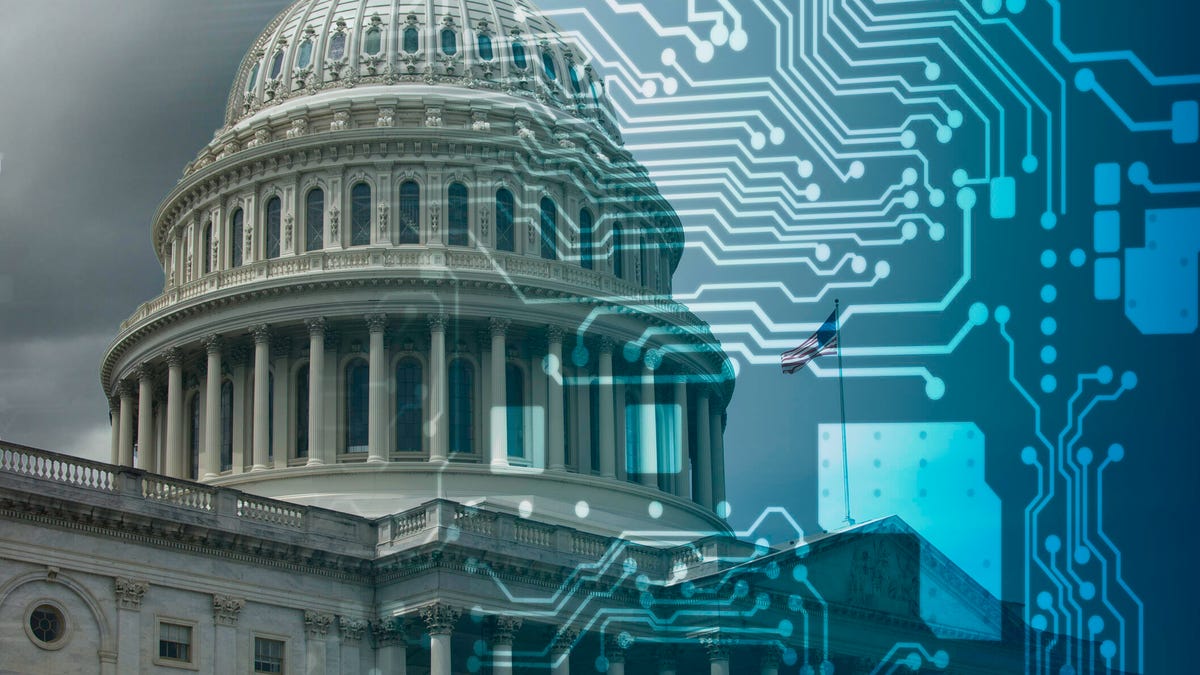

As the political spotlight pivots yet again, all eyes are on the anticipated unveiling of former President Donald Trump’s artificial intelligence priorities and an accompanying Action Plan.
The timing, one might argue, is both opportune and fraught with peril.
The world stands at a crossroads, where the relentless march of generative AI promises revolutionary advancements while simultaneously posing existential questions about privacy, economic stability, and the very fabric of society.
Yet, for all the grand pronouncements expected, a deep-seated skepticism lingers among those who have watched the AI landscape evolve.
There is a quiet resignation that the coming blueprint may prioritize technological deployment over the essential guardrails desperately needed.
Indeed, the Trump administration’s past leanings have been decidedly AI-friendly, a stance often underscored by the presence of enthusiastic tech executives standing shoulder-to-shoulder with the former president.
This history suggests a future where powerful new AI technologies are unleashed into more facets of American life, potentially with insufficient oversight.
But AI, particularly its generative iteration, is far from a finished product.
While it offers tantalizing glimpses of efficiency – from bolstering home security systems to streamlining meeting notes – it also stumbles on basic arithmetic, struggles with empathy, and occasionally fails to identify the current year.
With billions pouring into its development, the societal returns ought to be profound and widely distributed, but only if its trajectory is carefully managed.
The rhetoric often frames this as a race against China, but the critical question is whether it’s a race to innovation or a perilous dash to the bottom.
One of the most pressing concerns centers on privacy.
The recent congressional skirmish over states’ rights to enforce their own AI regulations, which thankfully failed thanks to a bipartisan pushback, highlighted the chaotic patchwork of current protections.
Many state laws, such as Tennessee’s pioneering legislation safeguarding country music artists from digital likeness duplication, focus squarely on personal identity and the use of automated systems.
However, relying on a fragmented mosaic of state-level rules or the slow grind of court decisions is simply untenable.
What is urgently required is a robust federal framework, a comprehensive guarantee of Americans’ right to privacy and personal identity in the age of AI.
Without it, the chilling prospect of widespread deepfakes and the erosion of individual control over one’s digital self become not a distant threat, but an imminent reality.
Then there’s the colossal energy footprint of AI.
Training and running these intricate models demands immense computing power, and keeping those NVIDIA chips humming and cool consumes prodigious amounts of electricity.
This burgeoning demand, coupled with the accelerating electrification of everything from home heating to vehicles and the escalating severity of climate-change-driven weather events, creates a perfect storm of stress on the nation’s already strained electric grid.
The good news, often overlooked, is that data centers don’t have to be an unmitigated burden on utility customers.
Policies can mandate their participation in demand response programs, effectively turning them into “virtual power plants” that can temporarily power down during peak stress times.
On the hottest summer days, when air conditioners strain the grid to its breaking point, it would be a moral failing if human suffering resulted from an inability to pause the computers training chatbots.
Perhaps the most visceral fear associated with AI is job displacement.
Even AI executives themselves are not shying away from predicting massive workforce disruption.
Anthropic CEO Dario Amodei’s stark warning that AI could eliminate half of entry-level white-collar jobs in the coming years is not hyperbole; it’s a strategic forecast from within the industry.
Companies like Shopify and Duolingo are proudly declaring themselves “AI-first,” signaling a shift that prioritizes algorithmic efficiency over human roles.
Whether AI can truly perform all these jobs perfectly is almost irrelevant; what matters is that CEOs and executives believe it can, and they hold the power to decide who remains employed.
The potential for sudden, mass unemployment is a crisis-in-waiting, demanding immediate, proactive planning from any administration.
The woeful unpreparedness of state unemployment systems during the early days of the COVID-19 pandemic should serve as a stark, cautionary tale.
A retooling of the entire economy could take far longer than the pandemic recovery, and a failure to prepare could unleash devastating social and economic consequences.
Beyond the immediate concerns, there’s the insidious creep of AI hype.
Companies are relentlessly selling AI as a panacea for every aspect of modern life, and while its genuine utility is undeniable in certain applications, not every marketing claim holds merit.
While the relentless churn of corporate marketing is unstoppable, the administration holds a crucial responsibility as a wise steward of public resources and the public interest.
Proposals to deploy AI within government services will undoubtedly emerge, but this technology is no magic wand.
Handing over critical functions to AI without rigorous proof of concept serves no one, save perhaps the vendor who sold the system, especially if the AI’s shortcomings necessitate human intervention to redo flawed work.
Ultimately, the grand promise of “making America great again” rings hollow if the chosen path is an all-in embrace of a technology still in its infancy, one already demonstrably linked to the proliferation of misinformation, significant environmental strain, and the general “slopification” of social media.
Policies that champion AI to the detriment of valuable human work and the erosion of our social fabric will not elevate the nation; they will, in all likelihood, make everything worse.
As the former president prepares to lay out his vision for AI, the hope, however faint, remains that it will be guided by foresight, responsibility, and a genuine commitment to a future where technology serves humanity, rather than the other way around.
But for many, holding one’s breath for such a comprehensive and cautious approach feels like an exercise in futility.