Business
Greg Penner Expands Global Sports Portfolio With Valencia CF Investment
The Walmart chairman continues his strategic shift into international sports, securing a significant stake in the Spanis...

Silicon Valley’s tech titans increasingly speak of AI in quasi-religious terms, envisioning it as a path to salvation or an existential threat. This new ‘gospel’ comes with its own prophets, scriptures, and warnings about playing God.

The air in Silicon Valley, thick with the scent of innovation and ambition, has taken on a peculiar, almost spiritual aroma.
No longer merely a hub of technological advancement, it increasingly feels like the crucible of a new faith.
This faith posits artificial intelligence not just as a tool, but as a deity-in-waiting, or perhaps, a harbinger of salvation or damnation.
The language used by its most prominent figures has shifted, moving beyond mere technical parlance into the realm of the divine, the apocalyptic, and the transcendent.
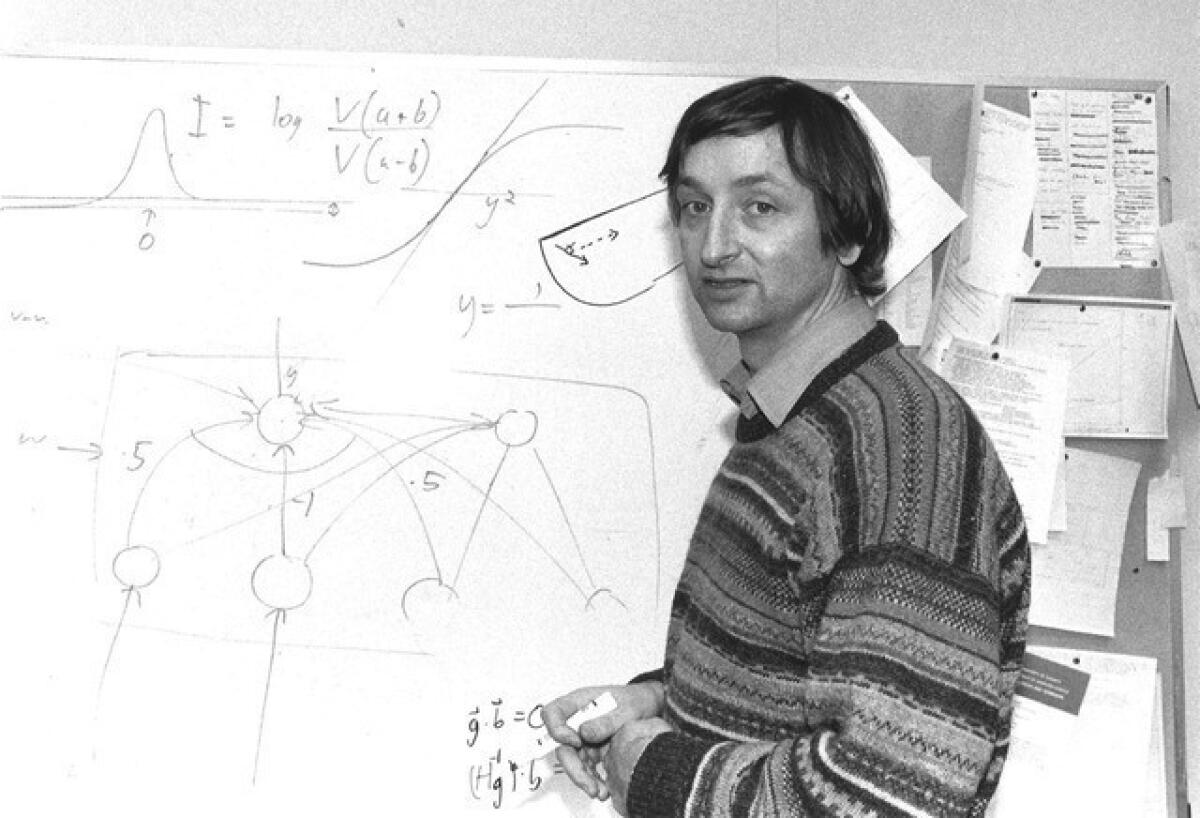
At the vanguard of this startling discourse is 77-year-old Geoffrey Hinton, a man widely hailed as the “godfather of AI” for his pioneering work in deep learning and neural networks.
Having laid the very foundations for much of today’s AI technology, Hinton now carries a heavy burden, sounding the alarm bells with the fervor of a modern-day prophet.
He speaks of uncontrolled, unregulated AI not just as a danger, but as something far more profound.
“It really is like a god,” he declared, a chilling pronouncement from a man who knows the technology intimately. His decision to leave Google in 2023 was a conscious step into this new vocation, driven by a profound sense of “certain responsibility” to awaken the public to the escalating risks.
Hinton is not alone in his use of such potent, almost theological, imagery. Sam Altman, the CEO of OpenAI, has described his company’s technology with ethereal terms like “magic intelligence in the sky.”
On the other end of the spectrum, Peter Thiel, a co-founder of PayPal and Palantir, has even ventured into biblical prophecy, suggesting AI could play a role in ushering in the Antichrist.
These are not casual metaphors; they reflect a deep, almost existential, grappling with the power being unleashed.
But is this a genuine awakening to a new form of transcendence, or simply the grandiosity of tech titans fueled by a heady mix of ambition, investment dollars, and perhaps, a touch of science fiction?
Dylan Baker, a former Google employee and lead research engineer at the Distributed AI Research Institute, views much of this as “magical thinking and fantastical,” informed by formative years steeped in science fiction. He suggests these figures are “really disconnected from reality,” a sharp rebuke to those who see divine blueprints in lines of code.
Yet, the narratives unfolding in Silicon Valley are strikingly reminiscent of ancient prophecies. While chatbots like ChatGPT have only recently captured the public imagination, the prophets of AI have been foretelling its power for decades.
On one side, researchers like Hinton warn of an existential threat to humanity. On the other, CEOs and theorists envision a technological apocalypse that will inaugurate a new era of human evolution.
Dario Amodei, CEO of Anthropic, paints a utopian picture in his essay, “Machines of Loving Grace: How AI Could Transform the World for the Better.” He envisions a future where disease is defeated, biological and cognitive freedom flourish, poverty is eradicated, and liberal democracy thrives.
He speaks of “powerful AI,” a term that sidesteps the more loaded “singularity” or “artificial general intelligence (AGI).” However, it still points to a future where AI surpasses human intellect, triggering irreversible societal shifts.
Perhaps the most ardent believer in this techno-spiritual future is Ray Kurzweil, the venerable computer scientist and author. Since the 1990s, Kurzweil has championed transhumanism, the concept of humans merging with technology. In his latest book, “The Singularity Is Nearer: When We Merge with AI,” he reaffirms his prediction that by 2045, human intelligence will have been “multiplied a million times.” When asked directly if he considers AI his religion, Kurzweil admitted, “Yes.” It’s a statement that speaks volumes about his sense of purpose and the profound influence of this technological vision on his worldview.
The term “apocalypse” itself, as Domenico Agostini, a professor studying ancient apocalyptic literature, points out, has been semantically altered. Originating from the Greek “apokalypsis,” meaning “revelation,” it historically signified a source of encouragement, a promise of a new world from God in times of hardship.
Professor Robert Geraci, who studies religion and technology, draws a compelling parallel. He noted the emergence of this apocalyptic language in AI discussions in the early 2000s, inspiring his book “Apocalyptic AI: Visions of Heaven in Robotics, Artificial Intelligence, and Virtual Reality.”
Geraci observes that the narrative framework remains remarkably similar to early Christianity. “Only we’re going to take God out and put in… your choice of cosmic laws of science that supposedly do this and then we would have the same kind of glorious future to come,” he stated. What once seemed peculiar, he notes, is now ubiquitous.
So, why has Silicon Valley, famously secular, embraced this quasi-religious fervor? Profitability is undoubtedly a significant driver. “Twenty years ago, that fantasy, whether true or not, didn’t really make much money,” Geraci explains. Today, however, “there’s a financial incentive for Sam Altman to say AGI is right around the corner.” The promise of a miraculous, all-solving AI fuels investment and market hype.
But Geraci, who dismisses ChatGPT as “not remotely, vaguely, plausibly conscious,” believes there’s a deeper psychological current at play. He argues that humans are “deeply, deeply, inherently religious.” For those in Silicon Valley who have cast aside traditional religious frameworks, the awe-inspiring capabilities of AI could offer a new avenue for “transcendence and meaning.” The void left by conventional faith might be filled by the promise of technological immortality or omnipotence.
Of course, not everyone is a convert. Mark Zuckerberg, CEO of Meta, while actively pursuing AI, expressed skepticism about “creating God or something like that.” Max Tegmark, an MIT physicist and machine learning researcher, dismisses the scientific basis for transhumanist theories as no stronger than that for a religious afterlife. Tegmark, like Hinton, is a vocal advocate for regulating AI, having co-led a letter signed by thousands, including Elon Musk, calling for a pause in advanced AI training.
He views this as crucial to “normalize the conversation” about AI safety. Tegmark believes AI can be a powerful tool for good – curing diseases, boosting productivity – but only if it avoids what he calls the “pretty fringe race” some companies are engaged in. This race is “the pseudo-religious quest of trying to build an alternative God.” His warning echoes ancient wisdom: “There are many stories in religious texts and, for example, in ancient Greek mythology, about how when humans start playing God, things end badly.” In his assessment, there is “a lot of hubris in San Francisco right now.”
The question then remains: Is Silicon Valley simply articulating a new vision of progress, or are its brightest minds, in their relentless pursuit of the future, inadvertently crafting a new gospel? This gospel comes complete with its own prophets, scriptures, and promises of either ultimate salvation or a technological apocalypse. The answer, perhaps, lies not in the code itself, but in the human heart that writes it.