Technology

Marvell and Lumentum Forge Massive AI Connectivity Alliance
The $115 billion acquisition marks a major shift in semiconductor strategy as firms race to secure optical infrastructur...

A new paper from AQR Capital Management and Yale University claims complex AI models are superior to human intuition in predicting market returns, sparking a fierce debate. This challenges long-held beliefs about financial modeling and raises questions about the future role of human analysts on Wall Street.
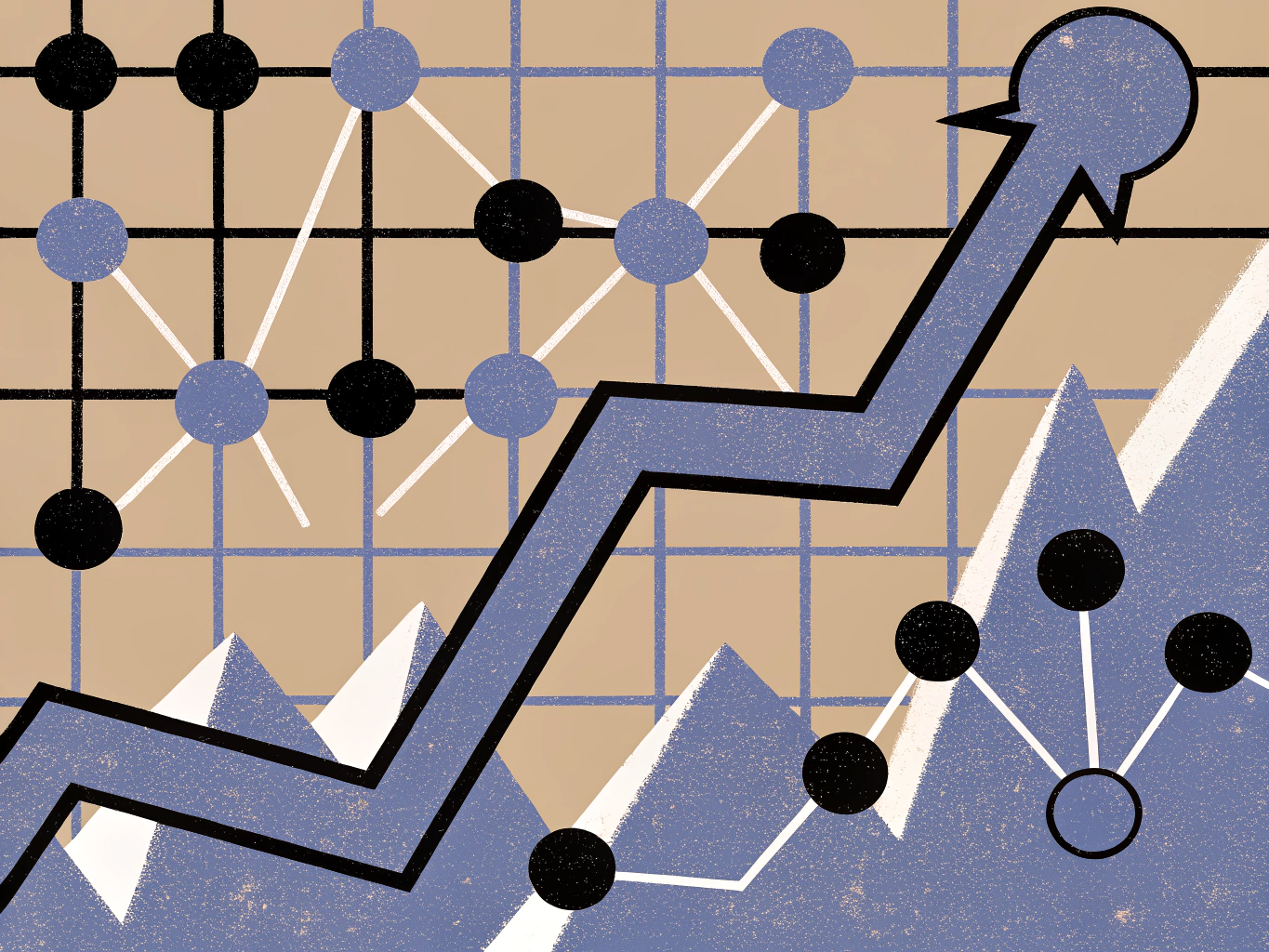

The very soul of Wall Street, long believed to be the exclusive domain of human intuition and intellect, is once again under siege.
A provocative new paper from researchers at hedge fund AQR Capital Management and Yale University has ignited a fierce debate, casting a long shadow over the future role of human researchers and traders in the increasingly complex world of finance.
At its heart lies a simple, yet profoundly unsettling question: Is artificial intelligence simply better at predicting market returns than we are?
In their 44-page treatise, “The Virtue of Complexity in Return Prediction,” Bryan Kelly, Semyon Malamud, and Kangying Zhao make a bold claim: more intricate models, those far too convoluted for the human mind to fully grasp, consistently outperform their simpler counterparts.
This isn’t just an academic exercise; it’s a direct challenge to the long-held belief that simplicity, clarity, and human understanding are paramount in financial modeling.
The backlash, as Bloomberg News reported, was swift and substantial, with at least six opposing papers quickly emerging, each seeking to dismantle Kelly’s findings.
Yet, Kelly stands firm, defending his team’s conclusions.
This intellectual skirmish highlights a fundamental philosophical divide in the realm of prediction.
One camp champions parsimony, advocating for models built on a handful of key indicators with clear, causally linked relationships to the desired outcome.
For these proponents, the goal isn’t just prediction, but also understanding and explanation.
Everything beyond these core variables is dismissed as random noise, to be ignored lest it lead to the dreaded “overfitting” – a model that perfectly explains the past but utterly fails to anticipate the future, having mistakenly latched onto transient noise rather than enduring signals.
The opposing view, epitomized by the AQR/Yale paper, posits that when the sole objective is prediction, complexity can indeed be a virtue.
This perspective leans towards the “kitchen sink” model, where every imaginable indicator, no matter how seemingly unrelated, is thrown into the algorithmic crucible.
The logic is that even if an indicator holds no true predictive value, its inclusion doesn’t necessarily harm the model; it merely adds noise that can either be shrunk through sophisticated techniques or diversified away through high-frequency trading.
The debate sparked by Kelly and his colleagues, however, is more nuanced than a simple “kitchen sink” approach.
Their model, while not incorporating trivialities like letters in ticker symbols or daily weather patterns, still fits an astonishing 12,000 parameters from 300 variables (15 core variables with 12 monthly values each) to predict the next month’s stock market return.
The contention from their opponents isn’t that complexity is never useful, but rather that it isn’t always beneficial.
This isn’t the first time such a battle of wits and technology has played out.
Half a century ago, a remarkably similar debate unfolded around the roulette wheel.
In the early 1960s, the legendary mathematician Ed Thorp, famed for his blackjack card-counting system, teamed up with Claude Shannon, the father of information theory, to build the world’s first wearable computer.
Their audacious goal: to predict roulette spins.
Prior attempts to beat the wheel relied on tabulating past results, a simple approach that many dismissed, arguing that roulette wheels were too perfectly engineered for such an advantage.
Thorp and Shannon, however, took a different path.
They understood that while the ball’s motion became chaotic once it left the track and bounced among deflectors, the initial phase – the ball’s speed, the wheelhead’s speed, and the coefficients of friction – contained enough deterministic information to make a profitable prediction.
By calculating what number was under the ball when it left the track, they could identify a one-third section of the wheel where the ball would land 40% of the time.
This was more than enough to turn a profit.
This wasn’t just a clever hack; it illuminated a core principle for quant investors: opportunity lies in discerning predictability in phenomena others dismiss as random, and recognizing uncertainty in what others treat as deterministic.
By the 1970s, building and proving a working roulette computer became a veritable rite of passage for aspiring quants, with advancements in technology only further refining their accuracy and reliability.
The parallels to today’s AI/ML revolution are stark.
Just as Thorp and Shannon uncovered hidden predictability in the seemingly random chaos of roulette, modern machine learning and artificial intelligence algorithms are poised to find their own patterns in vast datasets, unconstrained by human-imposed theoretical frameworks or preconceived notions of “relevant” data.
As Aaron Brown, a former head of financial market research at AQR Capital Management and an active voice in the crypto space, emphatically states, he has long believed that machine learning and AI will ultimately replace human analysts and traders, much like they are predicted to transform other professions from driving to medicine and law.
These algorithms, unburdened by human biases or the need for intuitive understanding, are designed to simply find what works for prediction, even if the “why” remains opaque to us.
The implications are staggering.
If the AQR/Yale paper proves to be the leading edge of a new paradigm, Wall Street’s future may well be written in lines of code rather than human insight.
The very definition of financial expertise could shift from deep, intuitive understanding to the ability to construct and manage ever more complex, self-learning systems.
Yet, even in the face of such technological inevitability, a healthy skepticism remains.
As Brown himself wisely cautions, “I’m often wrong, so don’t put all your money on the number my roulette computer likes best.”
Perhaps, even in an era dominated by algorithms, the most human trait – the capacity for doubt and continuous inquiry – remains an essential hedge against absolute certainty.