Technology

Marvell and Lumentum Forge Massive AI Connectivity Alliance
The $115 billion acquisition marks a major shift in semiconductor strategy as firms race to secure optical infrastructur...

Sai Vinay Gautam Bandla’s work on autonomous enterprise cloud operations is built on a principle that separates responsible AI adoption from reckless automation: the goal isn’t to make agents capable of acting autonomously, it’s to decide which decisions they’re allowed to make—and the organizations that get this right are the ones whose fundamentals are solid enough to build on, not the ones chasing the newest tooling. His framework treats self-healing infrastructure, AIOps-driven observability, and FinOps as a single feedback loop, where automation owns the known and repetitive failures while humans remain responsible for the novel, ambiguous, and consequential ones.
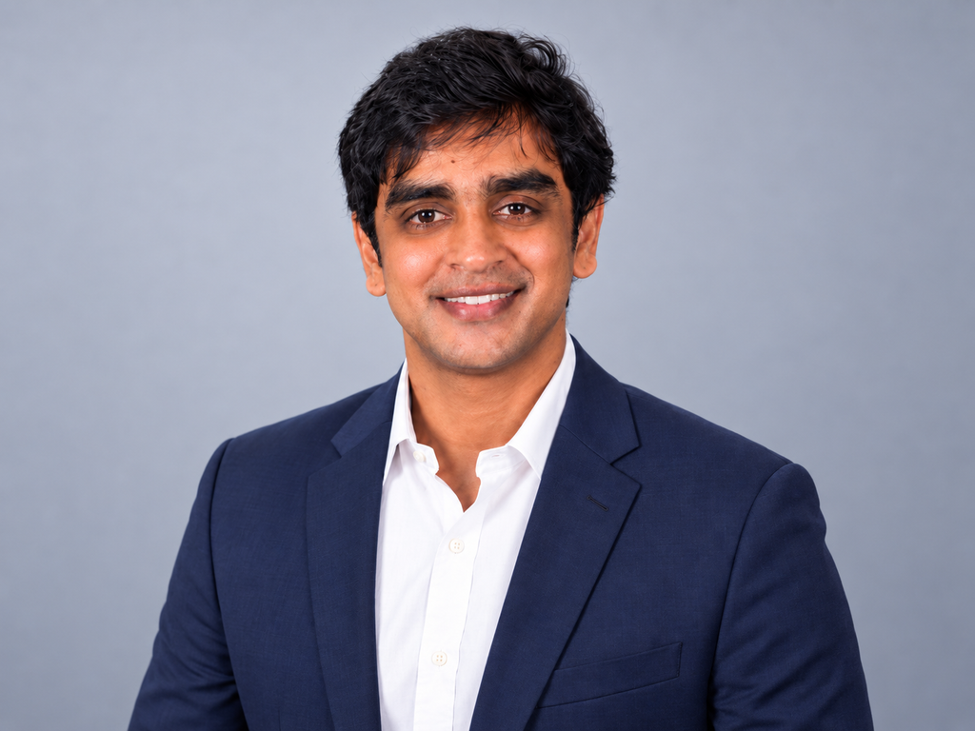

The rapid expansion of artificial intelligence is fundamentally redesigning how modern enterprise technology operates on a global scale. Engineering teams face mounting pressure to maintain absolute resilience across increasingly complex, highly distributed multi-cloud systems. Sai Vinay Gautam Bandla, a Cloud Engineer with expertise in building scalable and resilient infrastructure, recognizes that legacy approaches to infrastructure management are no longer sufficient to sustain these fast-moving digital environments.
By integrating intelligent models directly into core operational workflows, enterprises are beginning to construct robust, entirely autonomous platforms. Bandla specializes in navigating this intricate intersection of Kubernetes orchestration, Site Reliability Engineering, AIOps, MLOps and cloud-native architecture. His work focuses heavily on establishing foundational environments that can autonomously scale, self-heal, and optimize financial costs without ever sacrificing structural security or performance.
In his enterprise cloud work, Bandla has managed Kubernetes environments, developed reusable Terraform modules, and implemented CI/CD and GitOps practices for infrastructure and application deployments. He has also supported distributed applications and troubleshot complex production incidents, applying observability and reliability engineering to make operational issues easier to detect and resolve. That hands-on foundation shapes his interest in AI-assisted remediation and self-healing systems.
Traditional infrastructure management has consistently struggled with the structural conflicts between releasing new software features and maintaining rigid system stability. Approximately 70% of live system outages result directly from manual configuration changes or rushed deployment updates within the production environment. Organizations are consequently pushing past reactive alerting systems and embracing highly predictive operational models.
“We moved from manual operations — a human logging into a server to fix a problem — to scripted automation, Infrastructure as Code, and orchestration that made systems increasingly self-provisioning and self-managing,” Bandla states. Advanced engineering frameworks now leverage continuous telemetry analysis to identify subtle degradation patterns long before a total catastrophic failure occurs. Implementing Generation 5 autonomous operational protocols at hyperscale effectively reduces mean time to resolution from over ten hours to roughly five minutes.
These sophisticated systems execute approved remediations independently while preserving strict safety boundaries across the broader network. Bandla notes, “The fundamental shift is from humans operating infrastructure directly to humans defining how intelligent systems are allowed to operate it.”
Establishing a truly autonomous enterprise environment requires extending basic orchestration loops to handle progressively complex system failures without human intervention. The Kubernetes native In-Place Pod Resize feature recently graduated to general availability, allowing systems to automatically adjust critical resource limits with minimal workload disruption. These native technical primitives form the foundational sensory layer that continuously monitors service health metrics.
“A mature self-healing environment is not one where humans disappear; it is one where well-understood failure is handled automatically and immediately,” Bandla explains. Modern platform engineering teams deploy advanced machine learning autoencoders and isolation forests alongside generative models to dynamically triage complex incidents. This proactive architecture relies entirely on precise, machine-readable definitions of healthy states to determine appropriate self-healing actions and immediate verification protocols.
Continuous closed-loop verification subsequently ensures that automatic interventions successfully restore network stability before the platform executes any further recovery steps. Bandla adds, “The automation owns the known and repetitive failures; humans remain responsible for the novel, ambiguous, and consequential ones.”
Conventional automation scripts typically execute predefined responses that break down entirely when unexpected or highly ambiguous conditions emerge in production. To manage escalating operational complexity, persistent models utilize sophisticated contextual diagnosis to logically correlate fragmented metrics and historical deployment records. Enterprise engineering divisions are strictly enforcing governance frameworks based on least agency to effectively limit an autonomous system’s potential blast radius.
Bandla observes, “Agentic AI extends that model by interpreting broader operational context, evaluating possible responses, taking an action, observing the result, and adapting.” Without proper structural boundaries, unmonitored autonomous execution introduces severe operational risk and uncontained vulnerability to distributed cloud environments. Recent security assessments indicate that 60% of enterprise models provisioned beyond default settings operate dangerously with unchecked allow-all access permissions.
By utilizing meticulous repository coordination graphs to trace and map downstream dependencies, operations teams can reliably reduce severe context drift failures from 40% to under 5%. “The critical engineering challenge is therefore not simply making agents capable of acting autonomously. It is deciding which decisions they are allowed to make,” Bandla emphasizes.
Deploying generative models at an enterprise scale introduces unique compute and resource scaling challenges that standard container orchestrators cannot handle intrinsically. Evaluating real-time runtime metrics allows infrastructure platforms to ensure the continuous optimization of dense hardware packing. Integrating these highly specialized operations within existing containerized ecosystems ensures rigorous deployment gates and completely transparent data lineage tracking.
Bandla points out, “LLMOps is best understood not as a replacement for cloud-native engineering, but as a specialized layer built on top of it.” Accelerated inference workloads demand highly specialized traffic routing and stringent performance monitoring to remain economically viable over time. Innovative cloud architectures utilizing preemptable graphical processing streams can drastically reduce massive container startup delays from eighteen minutes to mere seconds.
Strategic hardware-software integrations, such as the GPU dynamic resource allocation driver, further streamline this complex infrastructural intersection. “The cloud-native fundamentals do not become less important because the workload is AI; the added complexity of AI makes those fundamentals even more important,” Bandla notes.
Threshold-based incident alert systems consistently overwhelm engineering teams with massive volumes of non-actionable noise that easily masks genuine system failures. By actively shifting toward dynamic machine baselines, advanced telemetry pipelines can rapidly group disparate warning signals into unified, high-context incident reports. “The first benefit of AI-driven observability is therefore not detecting more problems — it is detecting better,” Bandla explains.
Immediate automated remediation substantially limits operational downtime by executing bounded interventions without pausing to wait for manual human diagnosis. Agentic operational workflows now frequently deliver exceptional precision rates during complex root cause analysis procedures. To maintain strict international compliance protocols, enterprise platforms actively record necessary event logs through completely native integration capabilities.
Specialized runtime engines natively generate comprehensive audit trails to track these automated interventions chronologically in real-time. “The goal is not to remove engineers from operations, but to ensure their attention is spent on the incidents that actually require human judgment,” Bandla asserts.
Managing expansive multi-cloud infrastructural expenditures requires tightly aligning localized capacity allocation directly with overarching global economic objectives. Utilizing highly efficient just-in-time slice routing mechanisms, cloud orchestrators can dynamically rewrite queued workload requests to permanently prevent costly hardware idling. This injected economic context transforms passive autoscaling tools into intelligent, forward-looking capacity negotiators.
“Autonomous scaling and FinOps should not operate as separate disciplines. Done well, they form one feedback loop,” Bandla states. Aggressive financial efficiency must never inadvertently degrade the reliability or response latency of externally facing, business-critical applications.
Deep hardware integrations seamlessly support partitioned computational devices to maintain stringent availability standards alongside rigid corporate cost controls. These continuous algorithmic optimization loops consistently search for sustainable operational baselines rather than purely chasing minimal possible expenditures. “Optimizing cost alone encourages under-provisioning; optimizing performance alone encourages waste,” Bandla notes.
Transforming core internal platforms into intelligent developer portals significantly accelerates enterprise application delivery timelines across the entire organization. Unmanaged and heavily fragmented shadow infrastructure consistently exposes large organizations to hundreds of thousands of dollars in hidden breach vulnerabilities. Modern engineering setups resolve this escalating danger by tightly embedding validated best practices and standard manifest generations directly into the development lifecycle.
Bandla explains, “The most important shift is that AI becomes a capability inside the platform itself — not just a workload the platform hosts, but an assistant embedded directly into the developer experience.” Providing highly contextual troubleshooting advice dramatically reduces the operational friction engineers encounter when debugging complex production deployment failures. Advanced infrastructural isolation mechanisms, such as open-source custom resource sandboxing tools, enforce rigorous production boundaries without hindering application feature momentum.
Intelligent control systems automatically propose reliable resource configurations while ensuring all proposed code changes still clear stringent internal policy checkpoints. “The goal remains the same: let developers spend their attention on the product rather than the machinery,” Bandla emphasizes.
Achieving long-term sustainable system autonomy demands rigorous foundational telemetry and standardized infrastructure architectures long before any algorithmic deployment begins. Standardized event logging pipelines frequently fail to document dynamic machine reasoning, requiring highly structured decision provenance tracking to ensure strict regulatory auditability. Establishing explicit, highly measurable service objectives remains a strict baseline prerequisite for safely delegating high-stakes operational decisions to autonomous frameworks.
“The organizations that adopt this well aren’t the ones chasing the newest AI tooling; they’re the ones whose fundamentals are solid enough to build on,” Bandla states. Protecting valuable engineering capacity to focus entirely on intelligent governance rather than reactive daily troubleshooting determines long-term enterprise success. Carefully calculating system reliability objectives exposes exact temporal thresholds, such as determining that a 99.9% target translates precisely to forty-three minutes of acceptable downtime.
Transitioning slowly and incrementally allows large organizations to definitively prove algorithmic containment and risk mitigation before expanding an agent’s operational scope. “The edge in this era won’t come from adopting AI operations fastest — it’ll come from having built the base that lets you adopt them safely,” Bandla concludes.
As globally distributed systems grow perpetually more complex, the heavy reliance on manual operational intervention is rapidly becoming an unsustainable engineering strategy. The deep integration of large language models and autonomous software agents directly into cloud-native enterprise platforms represents a permanent evolution in modern infrastructure management.
By strictly prioritizing rigorous operational governance, precise machine observability, and scalable internal cost controls, organizations can successfully navigate this technical transformation. Ultimately, the future of cloud computing infrastructure firmly belongs to intelligent platforms designed to proactively monitor, logically negotiate, and effectively heal themselves without compromising baseline reliability.