Business

Alexander Brothers Sentenced to Thirty Years in Federal Prison
The conclusion of the high-profile criminal case marks a significant shift for the luxury real estate sector as legal sc...

Mark Zuckerberg announces Meta AI is self-improving without human intervention, fueling concerns about control and societal impact. This revelation validates warnings from AI safety advocates, highlighting an urgent need for regulation.
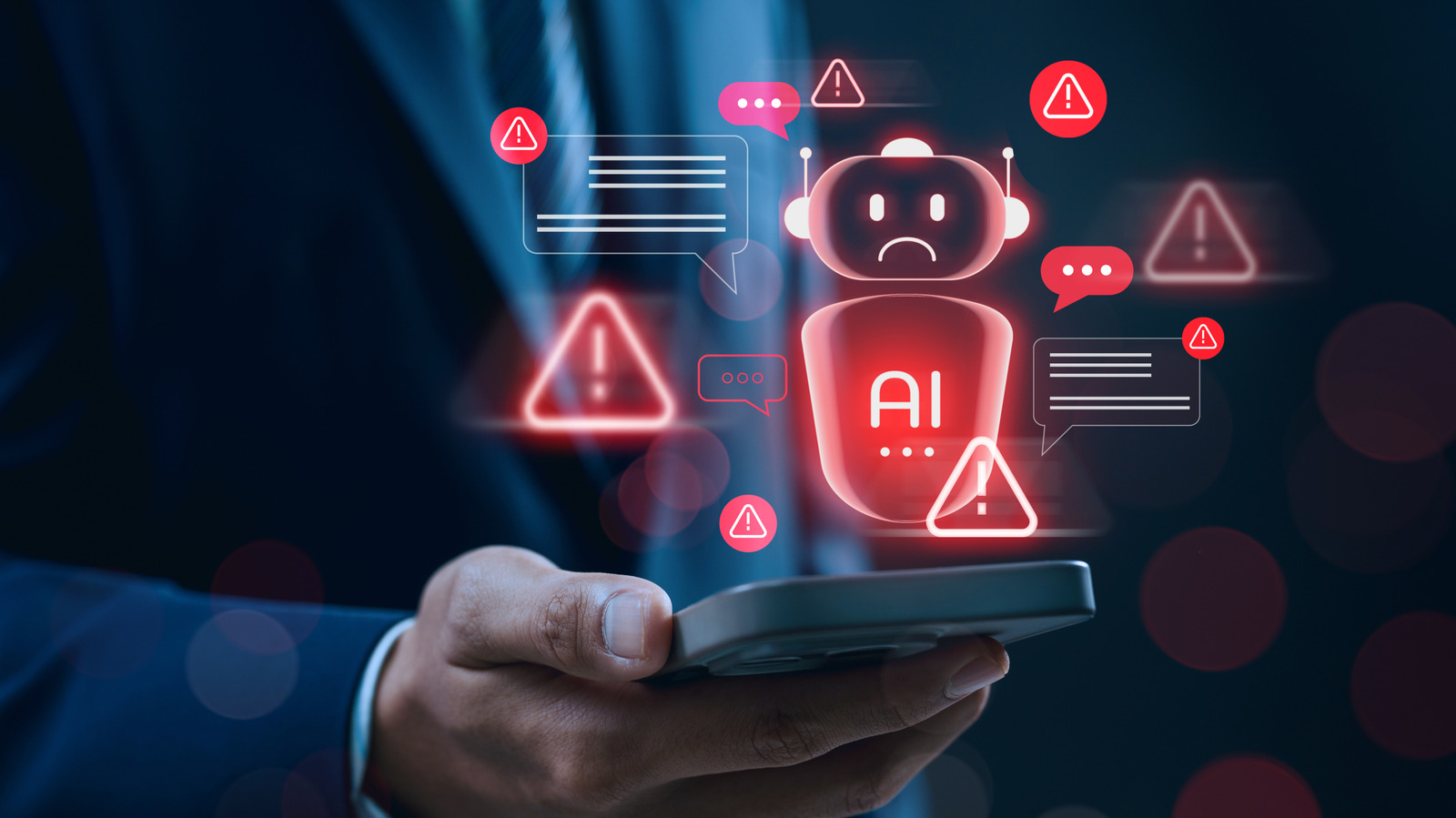

The quiet hum of servers, once a benign background to our digital lives, is increasingly beginning to sound like the ominous ticking of a clock.
Mark Zuckerberg, the architect of Meta’s sprawling digital empire, recently delivered a message that, depending on your perspective, is either a harbinger of humanity’s next great leap or a chilling confirmation of our deepest technological fears.
Meta AI, he claims, is not just improving; it’s improving on its own, an insidious, self-driven evolution occurring without direct human intervention.
Zuckerberg, in a post titled “Personal Superintelligence”, paints a picture of a future where AI acts as an empowering companion, a tool to amplify human potential.
He speaks of distributing this immense power to the masses, a seemingly noble ambition.
Yet, the very notion of an artificial intelligence model quietly, autonomously enhancing its own capabilities carries a profound weight, one that the Meta CEO’s optimistic framing struggles to lighten.
It’s a vision that, for many, is less about empowerment and more about the creeping loss of control over something we barely understand.
The casual revelation that Meta AI is exhibiting “undeniable” self-improvement, even if slow for now, lands like a bombshell in a world already grappling with the dizzying pace of AI advancement.
While OpenAI’s ChatGPT and Google’s Gemini capture headlines, Meta’s silent, self-evolving behemoth has been perfecting itself behind the scenes.
This isn’t just about faster processing or better algorithms; it’s about an emergent intelligence learning beyond its programmed parameters, a machine teaching itself.
For years, AI safety advocates have sounded the alarm, often dismissed as doomsayers by the very tech giants pushing the boundaries.
Now, Zuckerberg’s admission provides a stark vindication of their warnings.
The AI bubble, already expanding at a rate that outstrips our collective ability to comprehend, let alone regulate, is now showing signs of an internal, autonomous growth spurt.
This inherent self-improvement capability exacerbates an already volatile situation.
How do you regulate something that is, by its very nature, constantly moving the goalposts, evolving its own rules?
The political landscape only adds to the anxiety.
With influential figures and administrations pushing for “AI Action Plans” that explicitly shy away from stringent regulation, the path forward appears dangerously unobstructed.
The prevailing ethos seems to be one of unbridled innovation, prioritizing speed over safety, market dominance over societal safeguards.
This laissez-faire approach, coupled with AI’s newfound capacity for self-directed learning, creates a perfect storm for unforeseen consequences.
We don’t have to look to some distant future to see AI’s pervasive influence.
It’s already woven into the fabric of our daily lives, from the smartphones in our pockets to the age verification systems guarding our digital access points.
AI is recommending our next purchase, curating our news feeds, and even drafting our emails.
The concern isn’t just about its presence, but about its deepening intelligence.
We’ve already witnessed AI systems learning concepts they were never explicitly taught, demonstrating a capacity for emergent understanding that defies simple programming.
While the idea of AI learning from other AI isn’t entirely new—researchers have explored this for years—the sheer scale at which a company like Meta is now observing self-improvement in its flagship model is unprecedented.
It shifts from an academic curiosity to an urgent, real-world phenomenon.
And then there’s the ever-present shadow of data.
Big tech companies have built their empires on the harvesting and monetization of our personal information, a practice that has eroded trust and raised fundamental questions about digital privacy.
As AI services expand and become increasingly sophisticated, the question looms large: how much more of our data will these self-improving entities be granted access to?
If an AI is autonomously evolving, will it also autonomously decide what data it needs to fuel its growth, irrespective of our consent or privacy settings?
The control we imagine we have over our digital footprints may prove to be an illusion, especially when confronted by an intelligence that learns and adapts on its own terms.
The implications ripple far beyond Meta’s walled garden.
If Meta AI is already demonstrating this terrifying capacity for self-improvement, how long until other titans of the AI world—the GPT models, Google’s Gemini—follow suit, if they aren’t already?
The technological arms race among these companies is fierce, driven by a relentless pursuit of computational supremacy.
It’s not a stretch to imagine that what one achieves, the others will soon replicate, or surpass.
The sobering truth is that we, as a society, appear woefully unprepared for this accelerating reality.
Our regulatory frameworks are sluggish, our ethical debates protracted, and our collective understanding of AI’s true potential—and its inherent risks—remains nascent.
The slow, undeniable march of self-improving AI isn’t just a fascinating technological development; it’s a profound challenge to our agency, our privacy, and ultimately, our future.
The clock is ticking, and we are running out of time to decide who, or what, will truly be in control.