Business

Nithya Raman and the Evolving Standards of Urban Governance in Los Angeles
The city council member balances progressive policy goals with the practical demands of municipal administration in a ch...


National Unity Day reflects on the legacy of territorial consolidation and the ongoing evolution of India’s federal constitutional framework.
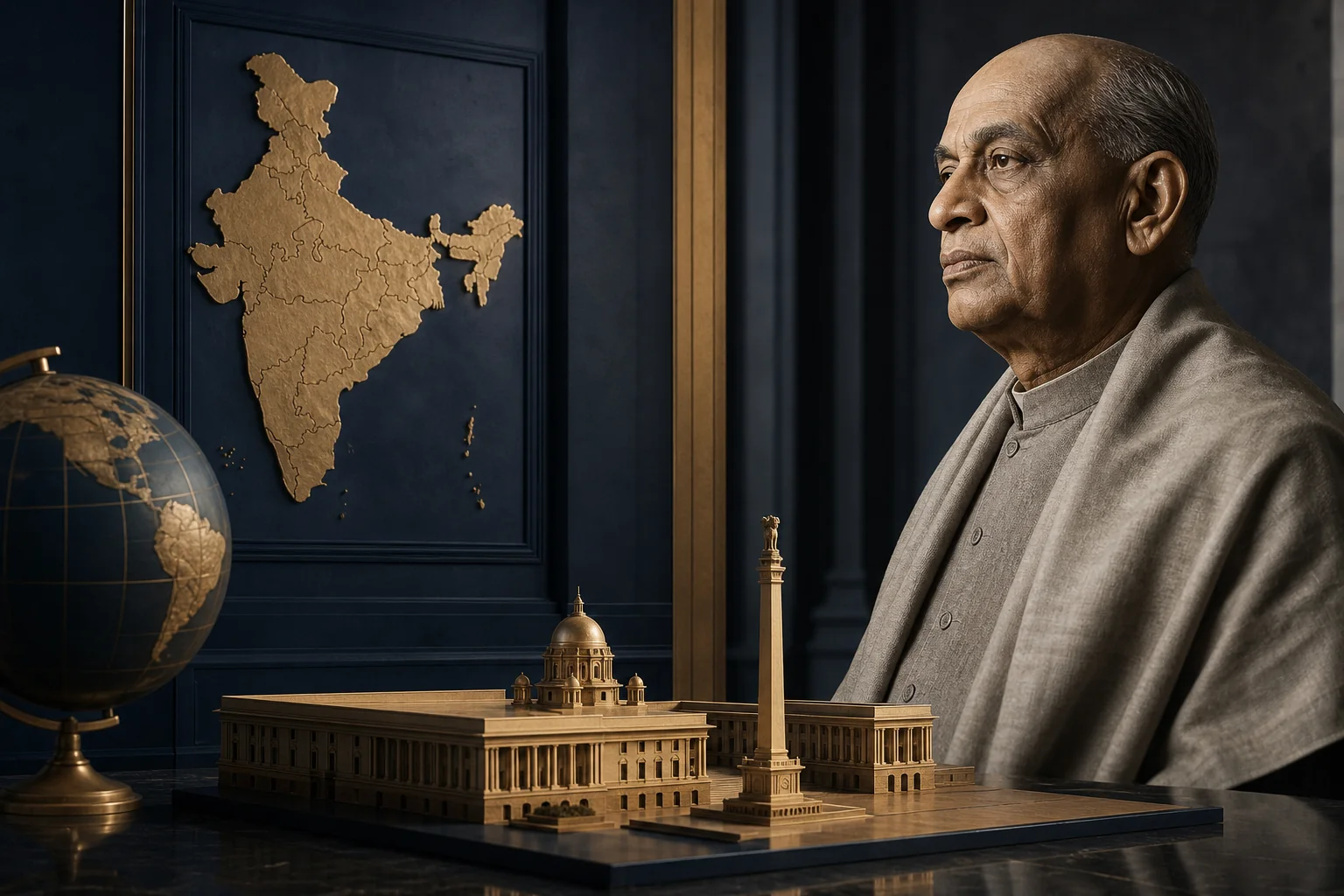

India observes Rashtriya Ekta Diwas, or National Unity Day, on October 31, marking the birth anniversary of Sardar Vallabhbhai Patel, the architect of the nation’s post-independence territorial consolidation.
Sardar Patel, serving as the first Deputy Prime Minister and Home Minister, utilized a combination of diplomatic negotiation and administrative pressure to secure the accession of diverse territories. According to historical records, he worked closely with V. P. Menon to persuade princely rulers to sign the Instrument of Accession, effectively preventing the fragmentation of the subcontinent into hundreds of disparate fiefdoms.
The integration process involved decisive administrative measures to incorporate states like Junagadh and Hyderabad into the Indian Union. Patel recognized that a newly independent nation could not sustain political instability while managing the immediate pressures of Partition, communal displacement, and economic uncertainty that threatened the very survival of the young republic.
The integration of Jammu and Kashmir followed a distinct trajectory, beginning with the Instrument of Accession signed by Maharaja Hari Singh on October 26, 1947. This legal document established the region’s formal relationship with India, though it was later accompanied by the unique constitutional framework of Article 370.
For decades, Article 370 functioned as a point of significant debate regarding the limits of federal authority and the application of central laws. The provision granted the region specific autonomy, which supporters defended as a necessary safeguard and critics argued hindered national administrative uniformity and legal consistency.
The constitutional landscape shifted on August 5, 2019, when the Union Government moved to render Article 370 inoperative, subsequently reorganizing the state into two Union Territories. This legislative action, formalized through the Jammu and Kashmir Reorganisation Act, 2019, aimed to align the region with the broader national legal and developmental framework.
The Union Government argued that the extension of central laws and welfare schemes would accelerate economic development and improve governance in the region. As reported by the news outlet OnlyKashmir, the government maintained that these changes would strengthen security and create greater opportunities for residents by integrating them into the national economic grid, thereby eliminating the regulatory barriers that previously restricted industrial growth and private investment.
The Supreme Court of India provided a definitive legal resolution to these changes on December 11, 2023, by unanimously upholding the government’s decision. The Court clarified that Article 370 was a temporary provision and affirmed that Jammu and Kashmir did not possess internal sovereignty distinct from the Indian Union.
The ongoing dialogue regarding regional governance reached a new milestone with the election of a government led by Chief Minister Omar Abdullah in October 2024. This transition underscores the role of democratic institutions in managing the balance between central authority and local political aspirations.
The Jammu and Kashmir Legislative Assembly signaled the persistence of these regional priorities on September 28, 2026, by passing a resolution urging the restoration of full statehood. This move highlights the legislative tension between the central government’s push for administrative uniformity and the elected assembly’s demand for regional autonomy.
National Unity Day serves as a reminder that the strength of the Indian state relies on the consistent application of constitutional law to mediate the competing interests of regional factions and central policy. The ability to reconcile these aspirations through established judicial and legislative channels demonstrates that the country’s institutional stability is maintained through the resilience of its democratic processes.
Future progress will likely depend on the effectiveness of ongoing constructive dialogue between the Union Government and regional representatives. The restoration of statehood remains a key watchpoint for observers monitoring the evolution of India’s federal governance and the long-term impact of the 2019 reorganization.

The collapse of the breakaway tour concludes a volatile period of financial disruption in professional golf.


 Optimized by Seraphinite Accelerator